Wilmington gets its share of damaging wind and rain from nor’easters and the remnants of tropical storms. A few hours of wind-driven rain can open a roof or window that then leaks for days before anyone notices. Here’s how to check your home after a storm and keep a roof problem from turning into a water damage problem.
- Nor’easters (fall to spring) and tropical storms (August to October) cause most storm damage in Wilmington.
- Storm leaks can show up days later, so check the attic and upper ceilings after the next rain.
- Document the storm date and damage, and report claims promptly.
- Don’t sign on the spot with door-to-door storm contractors.
Wilmington’s storm seasons
Tropical storms and hurricane remnants are most likely from August through October. Nor’easters can arrive any time from October to April, often lasting a day or more. Severe summer thunderstorms bring sudden downpours and gusts. The National Weather Service office in Mount Holly, NJ issues watches and warnings for New Castle County.
What to check outside (from the ground)
Don’t climb onto the roof. Wet, damaged roofing is slippery, and a professional can inspect safely. From the ground, with binoculars if you have them, look for:
- Missing, lifted or creased shingles, and shingle pieces in the yard
- Flashing pulled away from chimneys, walls and vents
- Limbs resting on the roof, gutters or rear additions
- Sagging or detached gutters and downspouts
- Torn or missing siding and trim, especially on the side facing the wind
- Broken windows, screens and skylights
If you have a flat rowhome roof, look from a neighbor’s upper window or ask a roofer to check for torn membrane, lifted seams and debris blocking scuppers and drains.
What to check inside
Storm leaks often show up inside first. After the storm, and again after the next heavy rain, check:
- The attic or top-floor ceilings: use a flashlight to look for wet insulation, damp roof sheathing or daylight showing through.
- Upstairs ceilings: new stains, bubbling paint or drips around light fixtures and vents.
- Around windows and doors: water on sills, stained drywall returns or swollen trim.
- Exterior walls: damp carpet or baseboards along the side of the house that faced the storm.
- The basement: new seepage, a sump pump that ran nonstop, or a floor drain that backed up.
Document for your insurance claim
- Note the date and approximate time of the storm.
- Photograph exterior damage from every side, plus any interior leaks.
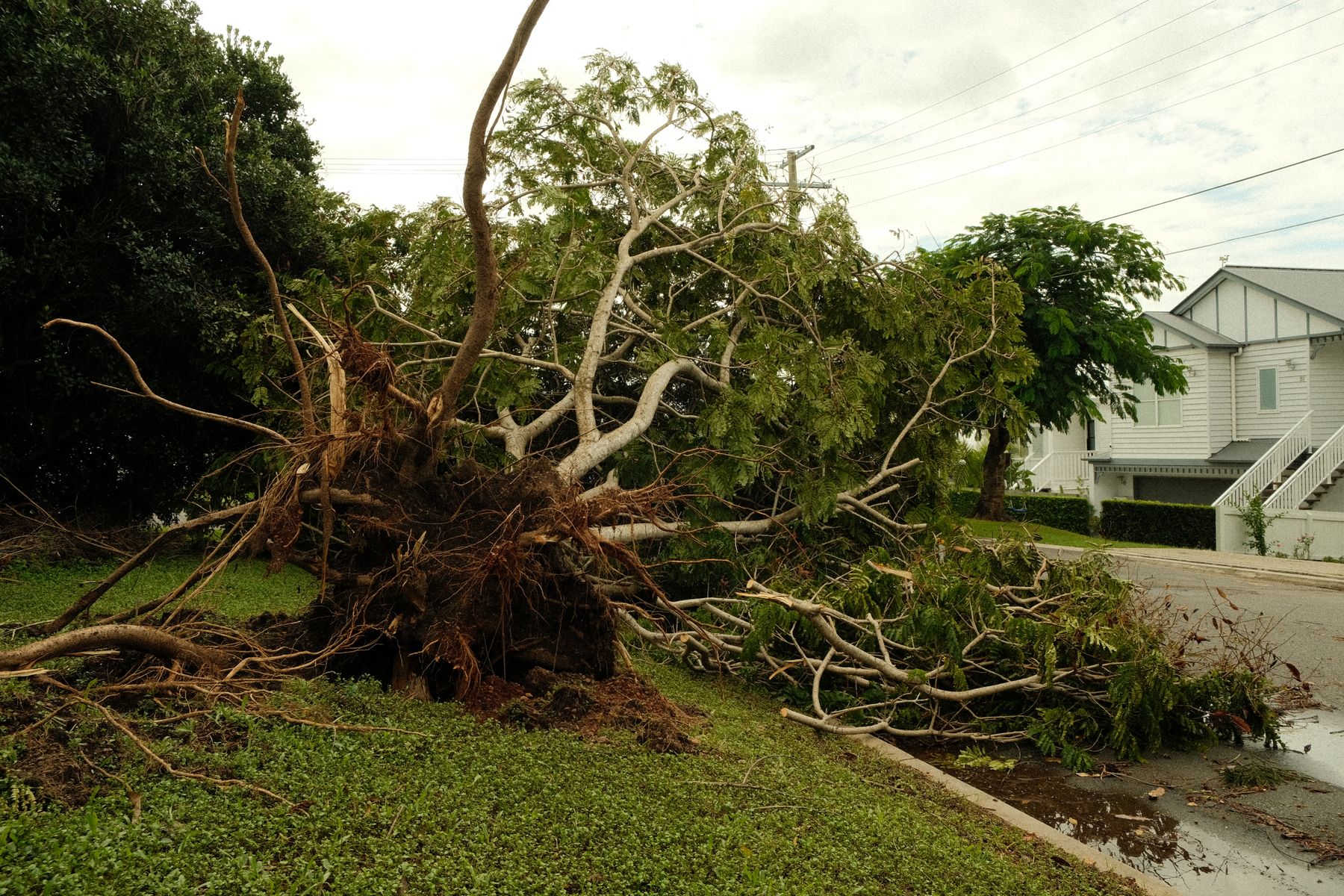
- Photograph fallen trees and limbs before they’re removed.
- Report the claim promptly. Policies generally require timely notice, and some carry a separate wind or named-storm deductible.
Prevent further damage
Most policies expect you to take reasonable steps to prevent further damage. If the roof or a window is open to the weather, emergency tarping or board-up protects the home until permanent repairs are approved. Inside, catch drips, move belongings, and get wet insulation and ceilings dried before mold sets in. See storm and hurricane damage restoration.
Wind damage vs. flood damage
Insurance treats water differently depending on how it got in. Rain that enters through a storm-damaged roof or window is generally handled under a homeowners policy. Water that rises from a creek, river or overland runoff is flood, which standard homeowners policies exclude and which needs a separate flood policy. Note where the water came in when you report the loss.
Be careful with storm chasers
After big storms, out-of-area contractors often canvass neighborhoods. Some are legitimate, and some aren’t. A few rules of thumb:
- Don’t sign anything on the spot, especially an agreement that assigns your insurance benefits.
- Verify a local presence, licensing, insurance and references.
- Get scopes and estimates in writing, and compare them to your adjuster’s scope.
- Be wary of anyone offering to cover or waive your deductible.
Related service: Storm & Hurricane Damage in Wilmington, DE.
Sources & industry standards
This guide is general information for Wilmington-area homeowners, written with reference to the sources above. It isn’t professional, legal or insurance advice. See our editorial standards.