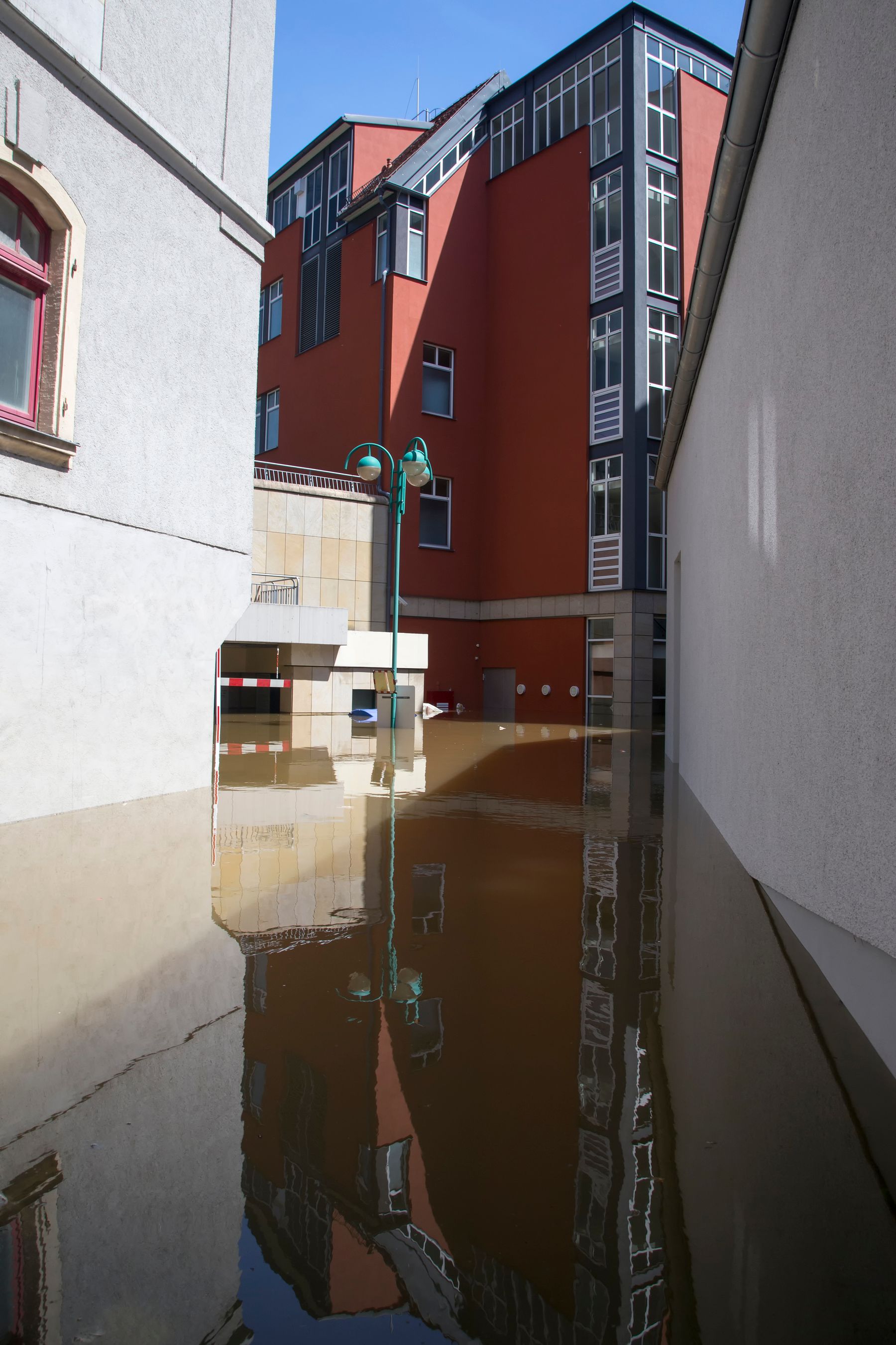
Flood damage cleanup in Wilmington covers water that enters from outside, such as Brandywine Creek or Christina River flooding, storm runoff and tropical storm rain. Floodwater is Category 3 (contaminated) water, so porous materials it touches are usually removed before the structure is sanitized, dried and rebuilt. Standard homeowners policies usually exclude flood; NFIP flood insurance covers it.
Floodwater isn’t the same as water from a broken pipe. Once rain or river water crosses soil, streets and yards on its way into a building, it’s considered Category 3, or “black” water, under industry standards. It can carry sewage, fuel, chemicals and bacteria, and it leaves silt and mud behind. Anything porous it touches, like carpet, pad, insulation and the lower part of drywall, usually has to be removed, not just dried.
Wilmington sits where the Brandywine meets the Christina River, a short way from the Delaware, with Red Clay Creek, White Clay Creek, Shellpot Creek and Little Mill Creek nearby. In September 2021 the remnants of Hurricane Ida pushed the Brandywine to record flood levels in the city. Most floods are smaller and more local than that, but the cleanup standards are the same.
Flood damage repair covers the whole recovery: pumping out water, removing mud and debris, tearing out contaminated materials, cleaning and sanitizing, drying the structure, and rebuilding what was lost.
Flood Damage Repair at a glance
- Availability
- 24/7, including nights, weekends & holidays
- Service area
- Wilmington, DE: 19801, 19802, 19803, 19804, 19805, 19806, 19807, 19808, 19809, 19810, 19850, 19880, 19884, 19885, 19886, 19890, 19893, 19894, 19895, 19896, 19898, 19899
- Water category
- Category 3 (contaminated)
- Usually removed
- Carpet, pad, insulation and drywall below the flood line
- Insurance
- Typically requires separate flood coverage (NFIP)
- Local flood sources
- Brandywine, Christina & Red Clay Creek, tropical storms, nor’easters, storm sewer backup
How Flooding Happens in the Wilmington Area
Flooding here comes from rivers and creeks, from heavy rain on low ground, and from storm sewers that can’t keep up.
Brandywine & Christina Flooding
Tropical storms and long, soaking rains can push the Brandywine, the Christina and their tributaries out of their banks.
Tropical Storm Rainfall
The remnants of Atlantic hurricanes can drop several inches of rain in a day, mostly from August through October.
Nor’easters
Slow-moving coastal storms bring days of rain and wind, saturating the ground and raising water tables.
Low-Lying Streets
Southbridge, parts of Newport and Stanton, and other low blocks collect runoff from the higher ground around them.
Storm Sewer Backup
When storm and combined sewers are overloaded, water backs up into low streets, basements and ground-floor rooms.
Window Wells & Basement Doors
Exterior basement stairs, doors and window wells fill during storms and empty into the basement.
What Floodwater Leaves Behind
- Silt and mud on floors and lower walls
- Water lines on drywall, plaster and baseboards
- Saturated insulation inside exterior walls
- Contaminated carpet, pad and upholstery
- Damp framing and sill plates
- Odors that worsen over the following days
- Damaged furnace, water heater or appliances
- Mold risk in walls and under flooring
Treat everything floodwater touched as contaminated until it has been cleaned and sanitized. Wear gloves and boots, and keep children and pets out of affected areas.
Floodwater in Your Home?
Don’t enter flooded areas if electrical outlets, cords or the panel could be underwater, and follow any evacuation orders. Once it’s safe:
- Shut off power to the flooded level at the breaker
- Avoid skin contact with floodwater and mud
- Photograph water levels and damaged items
- Call your flood insurer to report the loss
How Does Flood Damage Repair Work?
Flood Damage Repair in Wilmington follows four steps:
Water Removal
Submersible pumps and extractors remove standing water, then mud and silt are cleared from floors and surfaces.
Contaminated Material Removal
Wet carpet, pad, insulation and drywall below the flood line are removed and bagged according to Category 3 practices.
Clean, Sanitize & Dry
Remaining structure is cleaned and treated with antimicrobial products, then dried with commercial dehumidifiers and air movers.
Rebuild
Insulation, drywall, flooring, trim and paint are replaced so the space is safe, dry and livable again.
What Does Flood Damage Repair Include?
- Pump-out of standing floodwater
- Mud, silt & debris removal
- Flood cuts & drywall removal
- Insulation removal & replacement
- Antimicrobial cleaning & sanitizing
- Commercial structural drying
- Contents cleaning or disposal lists
- Reconstruction & finish work
Flood cleanup also produces records you’ll need for insurance: photos of water levels, an itemized list of removed materials, and moisture logs showing the structure was dried before it was closed back up.
Flood Insurance and Wilmington Homes
Standard homeowners insurance policies generally do not cover flooding from rising rivers, creeks or overland runoff. That coverage usually comes from a separate flood policy, such as one through the National Flood Insurance Program. Water that enters from above, like a storm-damaged roof or a burst pipe, is handled differently from water that comes in at ground level.
You can look up any address on FEMA’s Flood Map Service Center to see its mapped flood zone. Homes near the Brandywine, the Christina, Red Clay Creek and low parts of Newport, Stanton and South Wilmington are worth checking, but floods also happen outside mapped high-risk zones, which is why many homeowners buy flood coverage even when a lender doesn’t require it.
Flood Damage Repair by Wilmington Area & ZIP Code
Flood Damage Repair is available in every Wilmington ZIP code. Here’s what to know in each part of the service area:
| Area | ZIP codes | What to know locally |
|---|---|---|
| Downtown Wilmington & Riverfront | 19801 | Southbridge and riverfront blocks sit close to the Christina, so heavy rain and high water reach basements and ground floors here first. |
| Northeast Wilmington & Brandywine Village | 19802 | Blocks nearest the Brandywine flooded after the remnants of Ida in 2021, and tropical storms can push the creek out of its banks again. |
| Trolley Square & the Highlands | 19806 | Homes along the south bank of the Brandywine and low corners near Rockford Park can take runoff during tropical storms. |
| Little Italy, Hilltop & Elsmere | 19805 | Low streets near Little Mill Creek collect storm runoff that can reach garages, basement doors and window wells. |
| Greenville, Centreville & Westover Hills | 19807 | Hillside lots and properties near the upper Brandywine can take runoff toward walk-out basements during tropical storms. |
| Brandywine Hundred, Talleyville & Arden | 19803, 19810 | Low spots near Shellpot Creek and Naamans Creek can take runoff during tropical storms and long, heavy rains. |
| Edgemoor, Bellefonte & Fox Point | 19809 | Low lots near the Delaware River stay saturated after coastal storms, and runoff can reach basements and crawlspaces. |
| Newport, Stanton & Prices Corner | 19804 | Low streets near Red Clay Creek and the Christina have a long flooding history during tropical storms and prolonged rain. |
| Pike Creek, Marshallton & Kirkwood Highway | 19808 | Low spots near Pike Creek, Mill Creek and Red Clay Creek can take runoff during tropical storms. |